By StyleDress Editorial Team
The best race day dresses are polished enough for the occasion, comfortable enough to wear for several hours, and practical enough for New Zealand weather. For most women, a well-cut midi dress is the easiest place to start, particularly when paired with comfortable heels or dressy flats and a considered accessory such as a fascinator or structured bag.
But there isn’t one universally “best” race day dress. The right choice depends on the racecourse, dress code, season, weather, how much walking you’ll do and how formal your hospitality area is.
This guide breaks down the most useful dress styles for women attending race days in New Zealand, including what to look for when shopping, which silhouettes tend to be easiest to wear, and how to finish the outfit without making it feel overdone.
Quick answer: Which dress is best for race day?
For a classic race day outfit, look for a structured midi dress in a refined colour or print. A defined waist, interesting neckline or clean tailoring can make the dress feel special without requiring lots of accessories.
Choose:
- Midi length for an elegant, versatile option
- A-line or softly fitted shapes if you want comfortable movement
- Structured fabrics when you want a polished look
- Breathable fabrics for warm-weather meetings
- A block colour if you want statement millinery or jewellery
- A subtle print if you prefer the dress to be the main feature
Before buying anything, check the dress code for your particular racecourse and enclosure. At Auckland Racing venues, for example, certain hospitality areas have specific standards and exclude items such as jeans, sports shoes and jandals. The organisation also describes dresses and headpieces as typical race-day attire in relevant areas.
What makes a good race day dress?
A race day dress needs to do slightly more work than an ordinary occasion dress.
You’re likely to be standing, walking between areas, sitting outdoors and moving around throughout the day. You may also want to add a hat or fascinator, which changes the visual balance of the outfit.
The most useful way to assess a dress is to consider dress + shoes + headwear + weather as one outfit rather than choosing the dress in isolation.
1. Choose the right level of structure
Race-day dressing generally benefits from some structure. This doesn’t mean a stiff or uncomfortable dress.
Look for details such as:
- A defined waist
- Pleating
- A shaped neckline
- Clean seams
- A fuller skirt
- Subtle tailoring
- Interesting sleeves
A very relaxed beach dress can look out of place at a formal race meeting, while an extremely elaborate evening gown can feel equally mismatched during a daytime event.
The sweet spot is usually polished daytime dressing.
2. Pay attention to the hemline
A midi dress — generally falling somewhere around the knee to mid-calf — is one of the safest choices for race-day dressing.
It’s dressy without feeling overly formal, and it works well with heels, flats and ankle boots depending on the season and venue.
A shorter dress can work for less formal settings, while a maxi can look beautiful when the fabric and silhouette are sufficiently refined. If you’re unsure, though, a midi is the easier starting point.
3. Think about movement
Try sitting down in the dress before committing to it.
This sounds obvious, but it’s one of the easiest things to overlook when shopping online.
Ask yourself:
- Does the skirt pull when I sit?
- Can I walk comfortably?
- Can I raise my arms?
- Does the neckline stay in place?
- Will I constantly need to adjust the hem?
- Can I comfortably wear the underwear I normally prefer?
If the answer to several of these questions is no, the dress probably isn’t going to become more enjoyable once you’re at the racecourse.
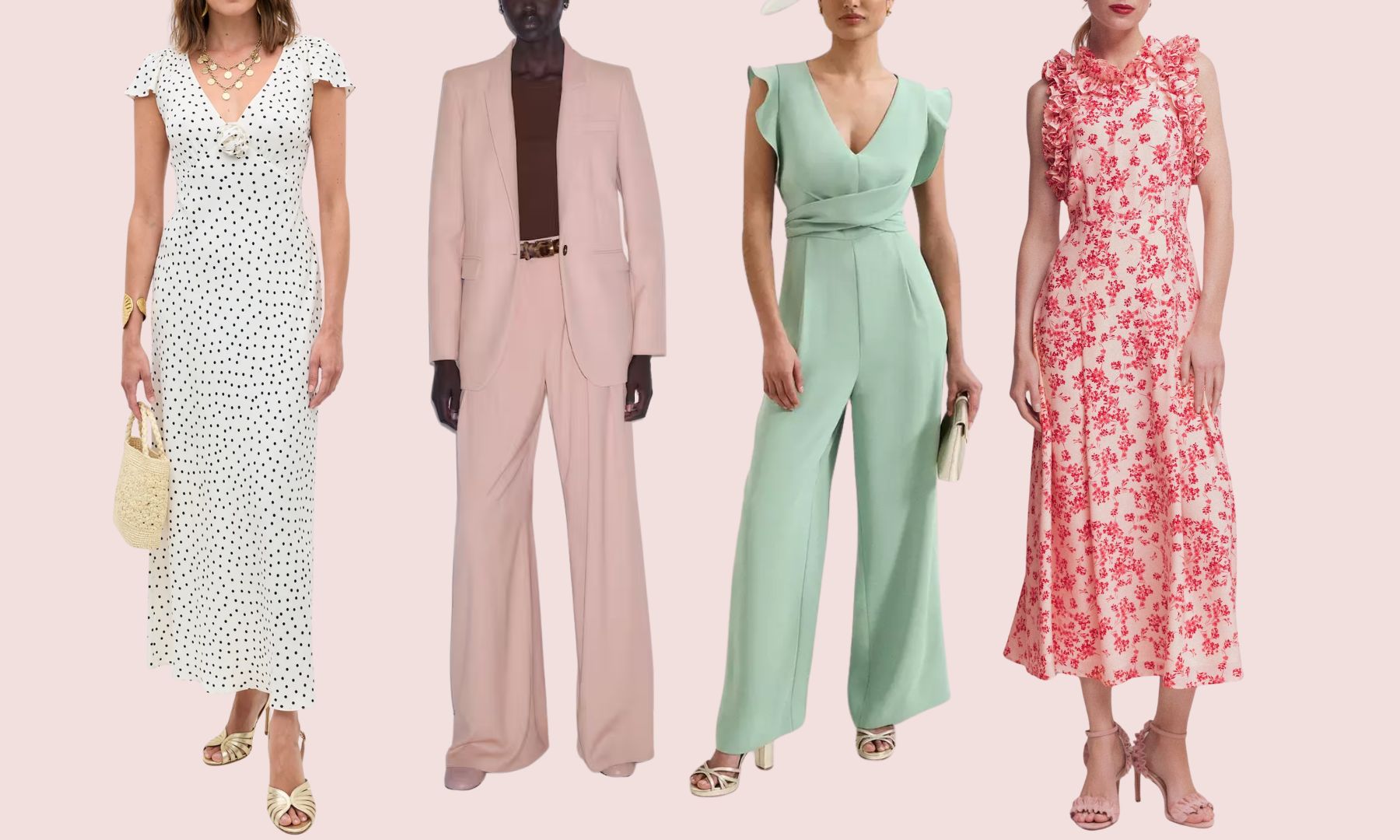
The best race day dress styles to consider
Rather than chasing one particular trend, start with the silhouette that suits the way you want to feel on the day.
| Dress style | Best for | Styling approach |
|---|---|---|
| Structured midi | Most formal race days | Heels + fascinator + structured bag |
| A-line midi | Easy movement and comfort | Block heels + simple jewellery |
| Wrap-style dress | Adjustable fit | Minimal accessories + elegant shoes |
| Tailored dress | Corporate or hospitality events | Sculptural earrings + sleek heels |
| Floral midi | Spring and summer meetings | Neutral shoes + simple millinery |
| One-shoulder or asymmetric dress | Fashion-focused events | Keep accessories restrained |
| Elegant maxi | Outdoor or more relaxed events | Low heels + refined bag |
The structured midi
If you’re buying one dress specifically for race days, a structured midi is arguably the most adaptable choice.
A fitted bodice with a softly shaped skirt gives you enough definition to look dressed up while retaining room to move.
Try navy, cobalt, emerald, burgundy, pink, cream or a sophisticated print. The exact colour matters less than choosing something that works with the accessories you already own.
Easy formula:
Structured midi dress + block heel + small bag + statement earrings + fascinator.
The A-line midi
An A-line silhouette gradually widens from the waist towards the hem.
It’s particularly useful if you don’t enjoy clingy dresses or want more freedom around the hips and thighs.
A fuller skirt also creates a useful contrast with structured headwear, so you don’t need to add lots of jewellery to make the outfit feel finished.
The wrap-style dress
Wrap dresses can be a practical choice when fit is your biggest concern.
The adjustable waist can make them easier to customise, although check that the neckline and fastening feel secure enough for a full day.
A wrap-style dress also works well when you want something that can be worn again to weddings, lunches or other daytime occasions.
The tailored dress
If your race day involves corporate hospitality, a tailored dress can be particularly effective.
Think clean lines rather than excessive decoration. A sleeveless sheath, belted midi or softly structured dress can look sophisticated with minimal accessories.
If the dress has strong tailoring, you don’t need an equally dramatic fascinator. Let one element lead.
Best colours for race day dresses
Race day is one of those occasions where colour can do much of the styling for you.
A single strong colour can look striking with simple accessories, while softer tones can create a more delicate outfit.
If you want something classic
Try:
- Navy
- Cream
- Black
- White
- Deep green
- Burgundy
These are particularly useful if you want to reuse the dress for weddings or other formal daytime occasions.
If you want to stand out
Consider:
- Cobalt blue
- Coral
- Fuchsia
- Emerald
- Bright pink
- Rich red
A bold dress doesn’t require bold accessories everywhere else. In fact, it often looks more sophisticated when paired with restrained shoes, jewellery and a simple bag.
If you prefer prints
Florals are an obvious choice for spring and summer, but they’re not your only option.
Polka dots, abstract prints, colour blocking and subtle geometric patterns can all work.
A useful rule is to look at the three main colours in the dress and use one of them for an accessory rather than introducing several unrelated colours.
What to wear to a New Zealand race day in changeable weather
New Zealand weather can make race-day dressing slightly more complicated.
A sunny forecast doesn’t necessarily mean you’ll spend the entire day in the sun, and an outdoor venue can feel very different from an indoor hospitality area.
For summer racing, breathable fabrics and lighter colours can be comfortable choices. For cooler meetings, consider a dress that works with a tailored coat or polished jacket.
If rain is possible, think about your footwear before anything else.
A very high, narrow heel may look beautiful in photographs but become frustrating on grass or wet ground. A block heel gives you more stability, while a dressy flat can be a sensible alternative if you’ll be walking extensively.
Practical NZ race-day formula:
Midi dress + comfortable block heel + tailored layer + compact bag + weather-appropriate headwear.
Don’t let the weather ruin the outfit you’ve spent time putting together. If rain is forecast, a smart coat can become part of the look rather than an emergency cover-up.
What shoes work best with race day dresses?
The best race day shoes are the ones you can realistically walk and stand in.
A block heel is often the easiest compromise between elegance and stability. A dressy flat can also work, particularly with a longer midi or tailored dress.
 Learn how to choose comfortable shoes for long events in our shoe comfort guide for all-day wear
Choose your shoes based on the venue
Mostly indoor hospitality:
Heels, slingbacks or polished flats can all work.
Outdoor lawn:
Prefer a stable block heel or refined flat.
Lots of walking:
Prioritise cushioning, fit and a secure strap.
Cooler weather:
A sophisticated ankle boot can work with the right dress, particularly for a less traditional race-day setting.
One practical tip: don’t debut completely unfamiliar shoes on race day. Even a beautiful pair can become a problem if the fit isn’t right.
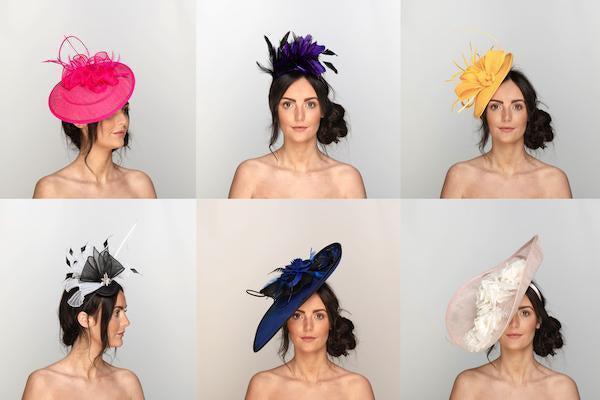
Do you need a fascinator?
No — not automatically.
Headwear depends on the event, enclosure, dress code and how formal you want your outfit to be. At some major racing events, millinery is a central part of race-day style; at others, it’s optional. For example, the Melbourne Racing Club lists millinery as optional for women in several Members’ Reserve dress standards, while formal race days have more elevated clothing expectations.
⇒ Check the Melbourne Racing Club’s current dress standards
For New Zealand race days, always check the specific venue rather than assuming a fascinator is compulsory.
If you do wear one, consider the balance of the whole outfit.
Simple dress + statement fascinator: works well.
Bold dress + large fascinator + dramatic jewellery: can become visually crowded.
A headpiece should complement the dress, not compete with it.
How to style your race day dress without overdoing it
Race-day outfits can become complicated very quickly because there are so many tempting accessories.
A better approach is to choose one hero element.
That might be:
- The dress colour
- A sculptural fascinator
- Statement earrings
- An unusual shoe
- A beautiful handbag
Then let the remaining pieces support it.
Explore our StyleDress occasion and accessory collections for finishing touches
Three easy outfit formulas
Classic:
Navy midi dress + nude or metallic block heels + structured bag + simple fascinator.
Colourful:
Bright pink or cobalt dress + neutral shoes + small clutch + restrained jewellery.
Modern:
Tailored midi dress + architectural earrings + sleek slingbacks + minimal headwear.
You don’t need every accessory to match perfectly. Repeating one colour or metallic finish is usually enough to make the outfit feel intentional.
Discover practical outfit building in capsule wardrobe pieces that can be styled multiple ways
What should you avoid when choosing a race day dress?
There aren’t universal fashion rules, and dress codes vary, but a few choices tend to create problems.
Extremely delicate fabrics
A dress that wrinkles after sitting for ten minutes may not be the easiest choice for a full day.
Uncomfortable shoes
This is probably the most common practical mistake. If you’re already questioning whether you can walk in the shoes, choose another pair.
Too many competing details
Sequins, dramatic sleeves, a huge hat, oversized earrings and an elaborate bag can all look interesting individually. Together, they may compete.
Ignoring the venue
A dress that works beautifully for a formal members’ enclosure may be unnecessarily elaborate for general admission.
Buying the dress before checking the dress code
This is an easy mistake to avoid. Dress regulations can differ between venues and even between areas within the same racecourse. Auckland Racing specifically notes that certain areas have dress standards and that entry can be refused when requirements aren’t met.
How to choose the best race day dress for your situation
If you’re overwhelmed by all the options, use this quick decision process.
Step 1: Check the invitation or venue.
Find out whether you’re attending general admission, a members’ area, hospitality or a fashion-focused event.
Step 2: Check the forecast.
Decide whether you need breathable fabric, a layer, covered shoes or rain-friendly footwear.
Step 3: Pick your silhouette.
Choose fitted, A-line, wrap or tailored depending on your comfort and preferred proportions.
Step 4: Choose the dress first.
Don’t buy a fascinator and then try to force the rest of the outfit around it.
Step 5: Add one standout accessory.
This keeps the look considered rather than cluttered.
Step 6: Walk, sit and move in the complete outfit.
This is especially important if the event will involve outdoor areas.
That final step is what separates an outfit that looks good on a product page from one that actually works at the racecourse.
Should you buy a race day dress or choose something you already own?
Buying a new dress can be fun, but it isn’t necessary.
If you already have a well-fitting midi dress in a suitable fabric and colour, you may be able to make it feel completely different with new accessories.
Try changing:
- Headwear
- Shoes
- Jewellery
- Belt
- Bag
- Jacket or coat
Build a versatile wardrobe with our minimal wardrobe guide for beginners
StyleDress also covers accessories including bags, hats, fascinators, shoes and jewellery, making these useful areas to consider when finishing a race-day look.
The easiest race-day shopping checklist
Before you buy, ask:
- Is the dress appropriate for the venue and dress code?
- Can I sit and walk comfortably in it?
- Does it work with shoes I can actually wear for several hours?
- Will the fabric cope reasonably well with the weather?
- Can I style it with accessories I already own?
- Is the colour easy to coordinate?
- Could I wear it to another daytime occasion?
- Does the fit feel good without constant adjusting?
If most answers are yes, you’re probably looking at a much better purchase than a dress chosen purely because it looks impressive online.
Final verdict: the best race day dress is the one that works as a complete outfit
For most women, a well-fitting midi dress with some structure, comfortable shoes and one considered statement accessory is the most reliable race-day combination.
But the “best” dress changes with the occasion. A tailored dress may be ideal for corporate hospitality, while a colourful floral midi can suit a relaxed spring meeting. For outdoor events, comfort and footwear matter just as much as the dress itself.
Race-day fashion is supposed to be enjoyable. Start with the dress code, check the weather, choose a silhouette you feel comfortable moving in, and then have fun with colour and accessories.
The result should look dressed up — without feeling like you’re wearing a costume.
FAQ’s
What is the best dress to wear to race day?
A structured midi dress is one of the most versatile choices for race day. It works with heels, block heels or dressy flats and can be styled with a fascinator, hat or statement jewellery depending on the venue.
Can I wear a maxi dress to the races?
Yes, a maxi dress can work for some race-day settings. Choose an elegant fabric and a polished silhouette, and check the event’s dress code first. A midi is generally easier to style for traditional daytime racing.
Do women have to wear fascinators to race day?
Not always. Whether headwear is expected depends on the racecourse, event and enclosure. Some racing events make millinery optional, while particular fashion competitions or dress codes may have specific requirements. Always check the venue’s current rules.
What shoes should I wear with a race day dress?
Block heels, dressy flats and secure slingbacks are practical options. If you’ll be walking on grass or spending much of the day outdoors, a stable heel is usually more practical than a very narrow stiletto.
What should I wear to a race day in New Zealand?
Start with the venue’s dress code, then dress for the season and forecast. A midi dress, comfortable dress shoes, a small bag and a tailored layer are a useful starting point for many New Zealand race days.
Can I wear a race day dress to a wedding?
Often, yes. A well-chosen midi dress can work for both race days and daytime weddings. Change the accessories to shift the look: a fascinator creates a stronger race-day feel, while more understated jewellery can make the same dress suitable for a wedding.