Choosing a race day fascinator is much easier once you stop treating it as a separate accessory and start treating it as part of the whole outfit. The right fascinator should suit the formality of the event, work with your dress or tailoring, balance your proportions and stay comfortable for several hours.
For a first race day, start with three questions: How formal is the event? What is my outfit already doing? And how much headwear can I comfortably wear? From there, colour, shape, size and placement become much easier to decide.
In New Zealand, race-day dress codes can vary considerably between clubs and events. Premier days tend to invite more polished dressing and statement headpieces, while industry days and smaller meetings can be more relaxed. Some specific areas also have their own dress expectations, so check the event or club information before buying anything.
The good news is that you don’t need to be an expert in millinery to get it right.
 If you’re building a first race-day outfit, our minimal wardrobe guide for beginners helps simplify choices.
Quick answer: what makes a good race day fascinator?
A good race day fascinator is proportionate to your outfit, appropriate for the event, comfortable enough to wear for hours and coordinated with at least one element of your look.
If you’re new to fascinators, a useful starting formula is:
Simple dress + structured fascinator + understated shoes + small handbag + restrained jewellery
If your dress is already heavily patterned, embellished or brightly coloured, choose a fascinator with a cleaner shape. If your outfit is relatively simple, your headpiece can provide the statement.
Think of the fascinator as the punctuation mark at the end of the outfit, rather than a completely separate sentence.
1. Check the race-day dress code first
Before thinking about colour or face shape, find out what sort of race day you’re attending.
New Zealand racing guidance distinguishes between more formal Premier Days, more relaxed Industry Days, and informal trials or sales. Premier events are the natural setting for striking headpieces, while less formal meetings usually call for a lighter approach.
That distinction matters because a dramatic sculptural fascinator can look fantastic at a major cup meeting but feel unnecessarily formal at a casual country meeting.
A simple guide
| Race-day setting | Fascinator approach |
|---|---|
| Premier or feature day | Structured, distinctive or more dramatic |
| Fashion-focused event | Statement shape or interesting detail |
| Industry day | Refined, smaller and easier to wear |
| Casual country meeting | Simple headpiece or understated hat |
| Hospitality or members’ area | Check the specific dress requirements |
Don’t assume every racecourse has identical rules. LOVE RACING notes that dress expectations can differ between clubs and areas within a venue.
Beginner tip: If the invitation doesn’t tell you what to wear, look at the event’s official information before shopping. It can save you from buying something far more formal than you’ll actually need.
2. Choose the fascinator after considering your outfit
The easiest mistake is buying a fascinator first and then trying to make the rest of the outfit work around it.
Instead, choose your main outfit first.
For a plain navy, cream or black dress, you have plenty of freedom. A contrasting fascinator can become the focal point, or you can stay tonal for a quieter look.
For a floral or patterned dress, pull one colour from the print rather than trying to match every shade.
For a bright dress, a neutral fascinator in cream, nude, black or a related tone can stop the outfit becoming visually crowded.
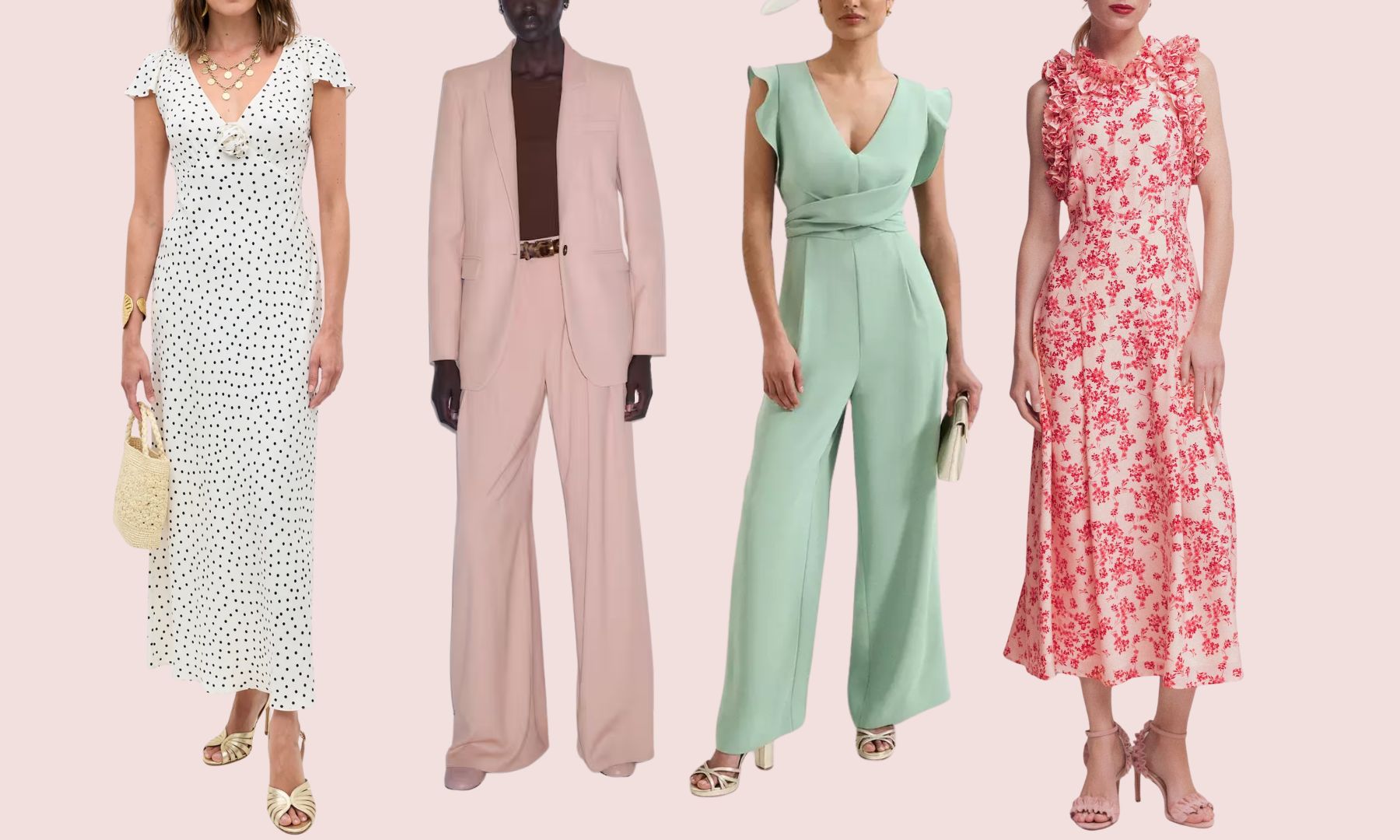
For tailored trousers and a blouse or jacket, a neat, architectural fascinator can add the occasion-specific polish that makes the outfit feel intentional.
A useful colour rule
You don’t need the fascinator to be exactly the same colour as your shoes and handbag.
A more natural approach is to create a colour connection. For example:
- Navy dress + ivory fascinator + nude shoes
- Emerald dress + black fascinator + black shoes
- Coral dress + soft pink fascinator + nude accessories
- Cream dress + chocolate-brown fascinator + brown shoes
- Floral dress containing blue + blue fascinator + neutral shoes
This creates coordination without making the outfit look like a matching accessories set.
3. Get the size right for your outfit
Size is one of the most important parts of choosing a race day fascinator.
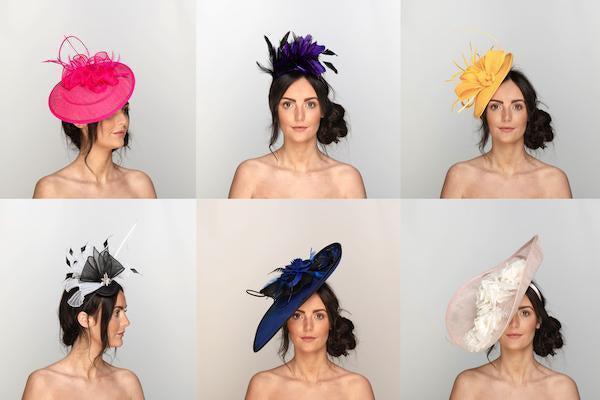
A fascinator doesn’t have to be enormous to look special. In fact, beginners often find a medium-sized design easier to style because it provides visual interest without dominating the face.
Think about proportion. Proportion simply means how the sizes and shapes of different parts of an outfit relate to one another.
If you’re wearing a voluminous dress with dramatic sleeves, ruffles or a full skirt, a very large fascinator may compete with the outfit.
If you’re wearing a streamlined midi dress, tailored jumpsuit or simple suit, you can often carry a more noticeable headpiece.
Your height and hairstyle matter too, but don’t turn these into rigid rules. The best test is whether the headpiece makes the whole outfit feel balanced.
If you’re petite
A smaller or more vertically shaped fascinator can be easier to wear than an extremely wide design. You don’t need to make yourself look smaller by avoiding headwear altogether; simply avoid allowing the accessory to overwhelm the outfit.
If you’re tall
You may have more room to experiment with scale, but the same principle applies: the fascinator should complement the outfit rather than compete with it.
4. Think about your face and hair — but don’t obsess over “face shape rules”
You’ll often see fascinators divided into recommendations for oval, round, square or heart-shaped faces. These can be useful starting points, but they aren’t laws.
The more practical question is: Where does the fascinator draw the eye?
A fascinator worn slightly to one side can create an interesting diagonal line. A taller design can add vertical emphasis. A wider design creates more horizontal emphasis.
Your hairstyle also changes the effect.
With short hair
A clean, sculptural fascinator can look particularly polished because there isn’t much hair competing with its shape.
With long, loose hair
Choose whether the hair or headpiece is the main feature. Soft waves plus a very elaborate fascinator can become visually busy, while a sleek hairstyle can make a dramatic piece feel more deliberate.
With an updo
An updo can provide a secure base, but make sure the fascinator’s fastening system works with your hairstyle rather than simply assuming it will stay put.
The most important point is comfort. If you spend the whole afternoon worrying that your fascinator is slipping, you won’t enjoy wearing it.
5. Choose the right shape for your personal style
Not every race day fascinator needs feathers, loops and oversized decorations.
There are several broad directions you can take.
Classic: clean curves, restrained decoration and traditional colours. Good if you want something you’ll be comfortable wearing again.
Modern: geometric shapes, sharper lines and minimal decoration. Works particularly well with tailored outfits.
Romantic: softer curves, flowers, delicate trims or lighter colours. Natural with feminine dresses and spring or summer racewear.
Statement: larger scale, unusual angles, strong colour or sculptural detail. Best when you’re happy for the headpiece to become the main conversation piece.
If you’re unsure, start with classic or modern. They’re generally easier to coordinate with clothes you already own.
6. Consider the weather before choosing your fascinator
This is particularly relevant for New Zealand race days, where the weather can change quickly.
An outdoor event means your fascinator needs to cope with more than photographs. Think about wind, sun, heat, rain and how much time you’ll spend walking between areas.
A delicate, lightweight design may be lovely on a calm day but less practical when there’s a strong breeze.
For a cooler meeting, your headpiece should also make sense with the rest of your outfit. A winter race-day look may be better suited to a structured hat, wool-based texture or richer colour palette than an airy summer fascinator. LOVE RACING’s winter racing guidance similarly emphasises practical headwear alongside warm, considered dressing.
Your five-minute weather check
Before leaving home, check:
- Is the event mainly outdoors?
- Is rain forecast?
- Will it be windy?
- Will I be standing or walking on grass?
- Do I need a coat or jacket?
- Can my fascinator remain secure if the weather changes?
This is where style and practicality meet. A beautiful fascinator that needs constant rescuing isn’t a successful choice.
7. Make sure it is actually secure
Try the fascinator on before the event and move your head normally.
Look down. Turn from side to side. Walk around. Sit down. If possible, try it with the hairstyle you’ll actually wear.
Many fascinators are attached using clips, combs, headbands or other fastening methods. The best choice depends on your hair and the design.
If your hair is fine or very smooth, don’t assume a small clip will automatically hold all day. A professional milliner or retailer can advise you on securing a particular style.
And don’t leave this test until race morning.
8. Match the fascinator to the rest of your accessories
Once you’ve chosen the headpiece, edit the rest of your accessories.
A large fascinator already provides visual interest, so you may not need oversized earrings, a dramatic necklace and a heavily embellished handbag as well.
Try this formula:
Statement fascinator → simple earrings → clean handbag → understated shoes
Or, if the fascinator is subtle:
Simple fascinator → statement earrings → elegant shoes or handbag
The goal isn’t minimalism for its own sake. It’s giving the eye somewhere to rest.
StyleDress’s approach to occasion dressing is built around coordinating the complete look, including accessories such as hats, fascinators, shoes, bags and jewellery.
9. Don’t forget the shoes
Race day can involve considerably more walking and standing than a normal lunch or dinner.
That makes footwear part of your fascinator decision, even though the two seem unrelated.
If you’re wearing a dramatic headpiece and elegant dress, block heels, wedges or polished flats can keep the outfit refined without forcing you into uncomfortable footwear. For outdoor venues, a stable heel is generally more practical than a very narrow stiletto.
If you’re unsure about comfortable footwear for a long event, StyleDress has a separate shoe comfort guide covering fit, support and practical comfort considerations.
For more on staying comfortable, see our shoe comfort guide for all-day wear.
10. Common race day fascinator mistakes
A few mistakes come up repeatedly when you’re new to occasion headwear.
Matching everything too literally
Fascinator, dress, shoes, handbag and jewellery don’t need to be identical. Coordination looks more natural than perfect matching.
Ignoring the venue
A delicate, elaborate fascinator isn’t necessarily practical for a windy outdoor meeting.
Choosing size before considering the outfit
Bigger isn’t automatically more stylish. The right scale depends on your clothing, proportions and the event.
Wearing too many statement pieces
If the fascinator is spectacular, let it have some space.
Forgetting comfort
A race day can last for hours. Test your headpiece, shoes and outfit together before the event.
Buying something you’ll never wear again
If your budget matters, consider a fascinator in a colour and shape that could work for weddings, garden parties or other formal daytime events. A restrained design can have much more mileage than an extremely theme-specific piece.
Three easy race-day fascinator formulas
For the first-time racegoer
Solid-colour midi dress + medium fascinator + block heels + small structured bag + simple earrings
This is the safest starting point if you’re nervous about getting the balance right.
For a statement outfit
Simple dress or tailored outfit + sculptural fascinator + understated shoes + minimal jewellery
Let one element do the talking.
For a relaxed outdoor meeting
Polished day dress + smaller fascinator or hat + comfortable wedges + light jacket + practical handbag
This keeps the look dressed-up without making it feel overworked.
For cost-conscious styling, explore budget-friendly outfit planning.
The easiest way to choose your fascinator
If you’re standing in front of a mirror with several options, use this order:
1. Check the dress code.
2. Choose your outfit.
3. Decide whether the fascinator or outfit is the focal point.
4. Select a colour that connects with the outfit.
5. Check the scale against your overall proportions.
6. Try the fastening with your actual hairstyle.
7. Consider wind, rain, walking and temperature.
8. Put on your shoes and accessories before making the final decision.
If one fascinator looks beautiful on its own but makes the entire outfit feel crowded, it’s probably not the right one.
The best race day fascinator is the one that makes the rest of your outfit make sense.
And if you’re new to race-day dressing, remember that you don’t need to recreate the most elaborate looks you’ve seen at major racing carnivals. New Zealand racing guidance itself makes the distinction between highly polished premier events and more relaxed meetings.
Start with the occasion, build the outfit, then add the headpiece. Once you approach it that way, choosing a fascinator becomes much less intimidating.
FAQ’s
1. Do I have to wear a fascinator to race day?
No. Whether headwear is expected depends on the event, venue and dress code. Fascinators are particularly suited to more formal or fashion-focused race days, while smaller meetings may be much more relaxed. Check the event’s specific guidance first.
2. Should my fascinator match my dress?
It doesn’t have to match exactly. Choosing a colour that appears in your dress or complements it is usually easier to style than trying to make every accessory identical.
3. What size fascinator should a beginner choose?
A medium-sized fascinator is a practical starting point because it can create a polished statement without overwhelming a simple outfit. The right size ultimately depends on your outfit, proportions and the formality of the event.
4. Which fascinator is best for windy weather?
Choose a design with a secure fastening and a shape that isn’t excessively lightweight or broad. Always test the fascinator before the event and consider whether you’ll be spending significant time outdoors.
5. Can I wear a fascinator with trousers?
Absolutely. A fascinator can work beautifully with tailored trousers, a blouse, blazer or jumpsuit. Keep the outfit polished and choose a headpiece whose shape suits the cleaner lines of tailoring.