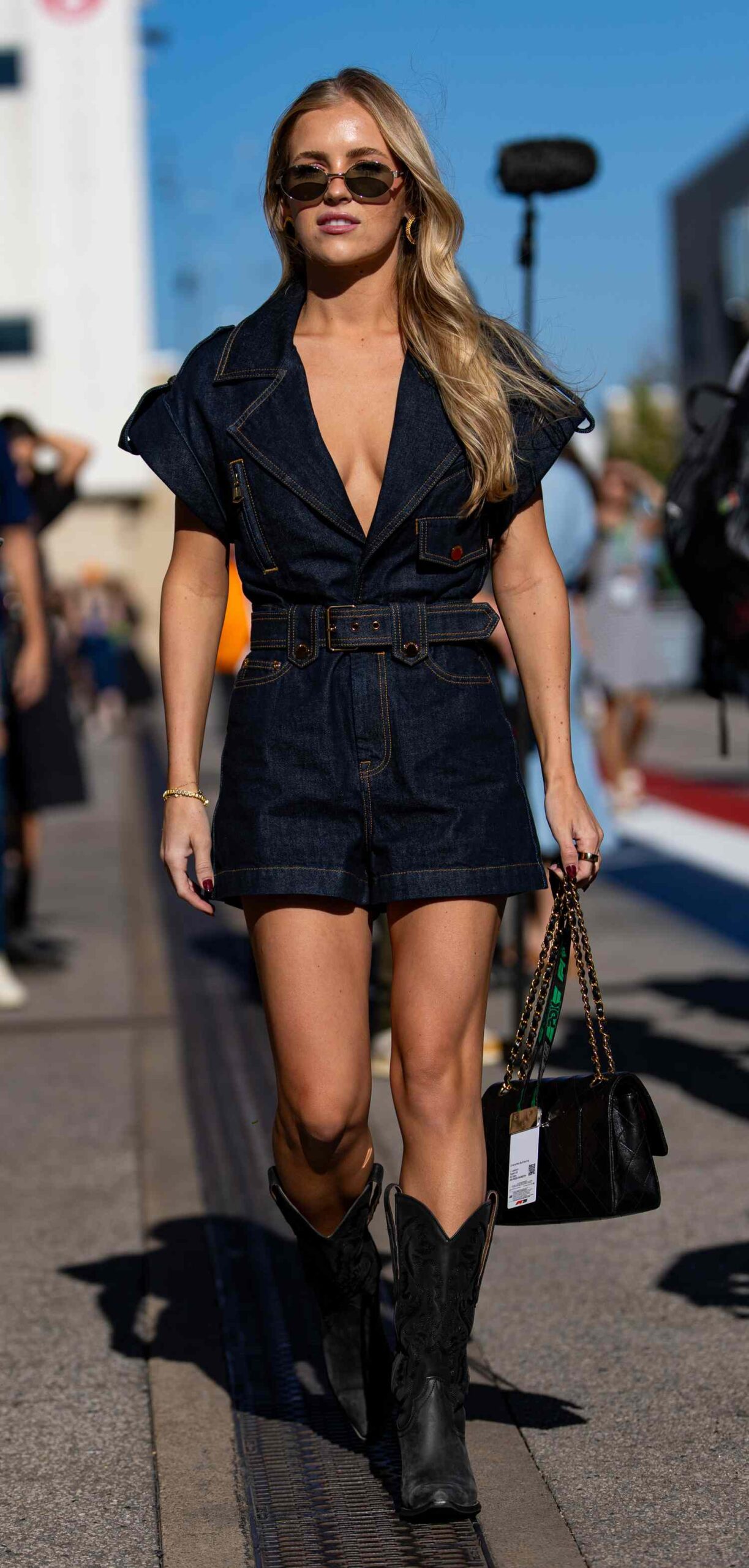
Race day dressing can look complicated, but the outfit usually comes together once you get the dress, shoes and one strong accessory right. For most women, a polished race-day look starts with a well-fitting dress, comfortable shoes, a small structured bag and considered headwear or jewellery.
The trick is not to add everything at once. Instead, build the outfit around the dress and decide what you want to be the focal point. A bold fascinator can carry a simple dress, while a patterned or detailed dress usually needs quieter accessories.
This guide covers race day dress styling from that first decision through to shoes, bags, jewellery, layering and unpredictable weather. The ideas are designed for beginners, including anyone attending the races for the first time and wondering how formal the outfit really needs to be.
Quick answer: How do you style a race day dress?
The easiest formula is:
Race day dress + polished shoes + structured small bag + one standout accessory + practical outer layer if needed.
For a classic look, try a midi dress with block heels, a fascinator and simple jewellery. For an outdoor event, prioritise footwear you can actually walk in and add a tailored coat or cropped jacket if the forecast calls for it.
There isn’t one compulsory race-day outfit. The venue, event, dress code, season and your own comfort all matter.
1. Start with the dress, not the accessories
If you’re unsure how to style a race day dress, resist the temptation to buy the fascinator first.
Look at the dress itself. Is it:
- Plain and structured?
- Brightly coloured?
- Floral or patterned?
- Romantic and flowing?
- Tailored and minimalist?
- Already detailed with pleats, ruching, embellishment or an unusual neckline?
This tells you how much styling the outfit needs.
A simple navy, cream or jewel-toned dress gives you room to make more of a statement with a hat, fascinator or shoes. A busy floral dress can look more polished with neutral shoes, a simple clutch and understated jewellery.
Think of the dress as the starting point rather than one item in a pile of matching pieces.
2. Choose a silhouette that suits the setting
A silhouette simply means the overall shape of a garment on the body.
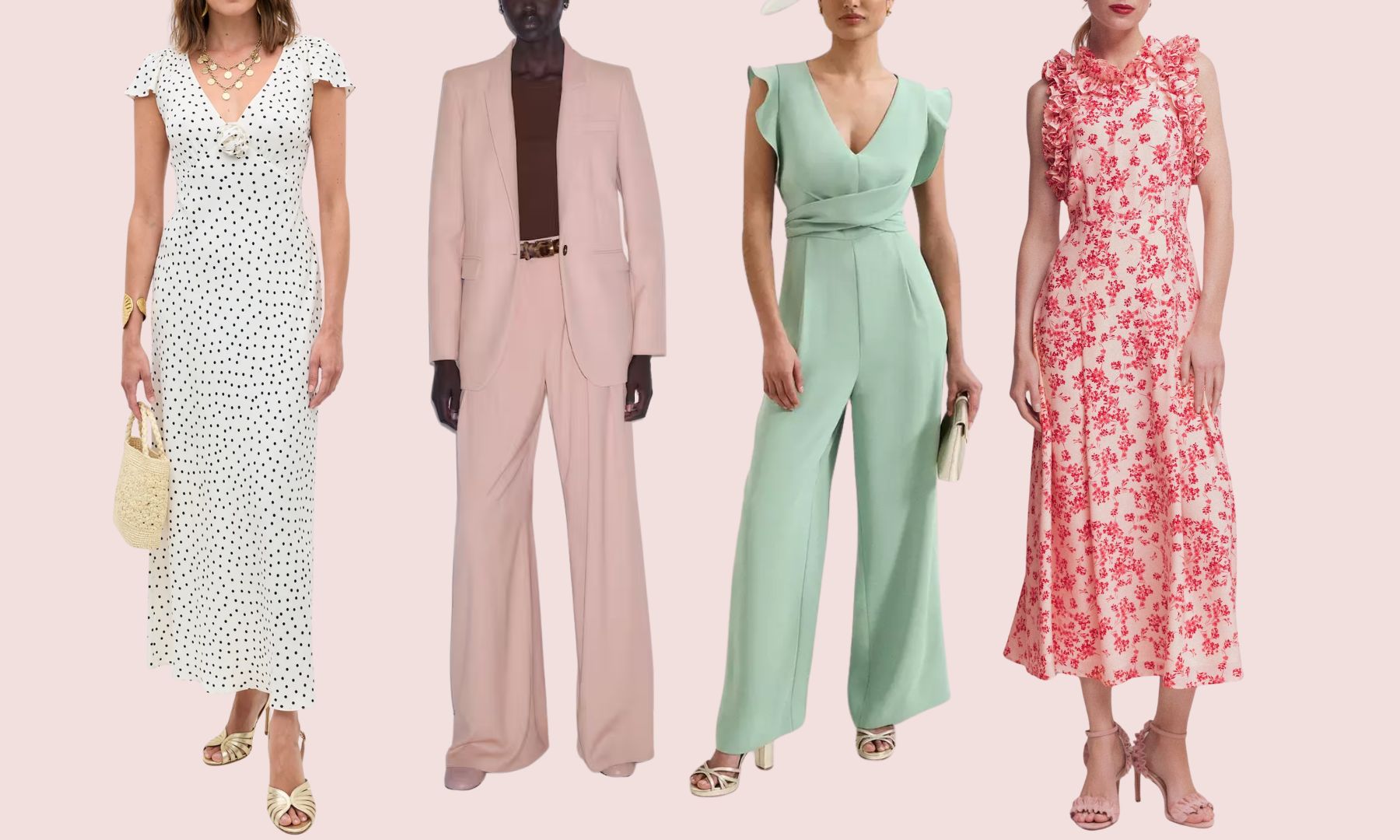
Midi dresses are an easy choice for race day because they feel polished without requiring the formality of a floor-length gown. A fit-and-flare shape can create definition at the waist, while a straight or softly tailored dress gives a cleaner, more modern appearance.
If you prefer trousers, don’t assume you have to wear a dress. A tailored trouser suit or elegant separates can also work for race-day dressing, depending on the event’s dress expectations. New Zealand racing fashion guidance has also highlighted tailored trousers as an alternative to skirts and dresses.
The better question is: Does the outfit look intentional for the event?
3. Let one accessory do the talking
One of the easiest ways to make race-day styling look sophisticated is to choose a single focal accessory.
That could be:
- A sculptural fascinator
- A wide-brimmed hat
- A colourful clutch
- Bold earrings
- A striking pair of shoes
- A statement belt
If your dress is already eye-catching, keep the accessory quieter.
If the dress is simple, you can afford to be more adventurous.
For example:
Navy midi dress → cream fascinator → nude heels → pearl or gold earrings
or:
Simple ivory dress → emerald earrings → matching green shoes → neutral clutch
You don’t need every accessory to match perfectly. Repeating one colour in two places is often enough to make the outfit feel coordinated.
 Explore Neutral Wardrobe Basics to understand how to create effortless, coordinated race day outfits.
4. Choose race day shoes for walking, not just photographs
This is one area where practicality matters.
Race days can involve standing, walking between areas of a venue and spending time outdoors. A beautiful pair of very high stilettos isn’t particularly useful if you’re uncomfortable after an hour.
Consider:
- Block heels for greater stability
- Mid-height heels for longer wear
- Dressy flats if the event allows them
- Shoes with a secure strap
- A sole that feels manageable on outdoor surfaces
For an outdoor race day, a wider heel generally makes more sense than a narrow stiletto if you expect grass or uneven ground.
The goal isn’t to make the lowest possible heel look formal. It’s to find a shoe that gives you the level of polish you want without making the rest of the day miserable.
Simple formula:
Midi dress + block heels + small clutch = polished without being overdone.
5. Match your bag to the scale of the outfit
A race-day bag should be useful without taking over the outfit.
A small structured handbag, clutch or compact shoulder bag generally works well. Choose one large enough for practical essentials such as your phone, cards, keys, lipstick and sunglasses.
Pay attention to proportion, too. A tiny clutch can look lost beside a very dramatic dress, while a large everyday tote can make a formal outfit feel too casual.
If your dress is colourful, a neutral bag is an easy choice. If you’re wearing a relatively simple outfit, the bag can introduce another colour or texture.
StyleDress’s own approach to occasion dressing includes accessories such as bags, hats, fascinators, shoes and jewellery, so these pieces can be treated as part of the outfit rather than last-minute extras.
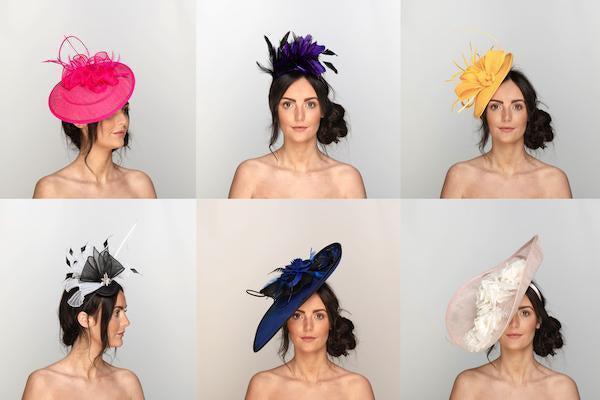
6. Add a fascinator or hat when it suits the event
Headwear is strongly associated with traditional race-day dressing, but you don’t automatically need an elaborate fascinator.
If you’re new to race-day style, start with the dress and consider the proportions of your face and hairstyle.
A smaller fascinator can work well when you want something subtle. A wider-brimmed hat creates more visual impact and can be especially useful for an outdoor daytime event.
A simple rule helps:
Detailed dress → simpler headwear.
Simple dress → more room for statement headwear.
Also check the event information before deciding. Dress expectations can differ between race meetings, hospitality areas and special fashion events.
7. Keep jewellery simple when the dress is busy
Jewellery should support the outfit rather than compete with it.
For a printed or embellished dress, try:
- Small or medium earrings
- A delicate bracelet
- One understated ring
For a simple block-colour dress, you have more freedom. Statement earrings can provide enough interest without needing a necklace, especially if the neckline is already distinctive.
A useful beginner trick is to choose either a statement necklace or statement earrings rather than automatically wearing both.
This keeps the outfit easier to read.
8. Prepare for New Zealand’s changeable weather
Race day may be a summer social event in your mind, but outdoor conditions can change quickly. A gorgeous dress isn’t much help if you’re cold, wet or trying to hold a coat all afternoon.
For cooler weather, consider:
- A tailored coat
- A cropped jacket
- A polished blazer
- A refined wrap or shawl
The outer layer should work with the dress rather than hiding it completely.
For warmer weather, look for a dress that allows comfortable movement and doesn’t require heavy layering. Natural-looking textures and lighter fabrics can make an outfit feel more appropriate when temperatures rise.
And don’t forget the practical details: sunglasses, sunscreen and a weather-appropriate layer can be more useful than an extra piece of jewellery.
9. Use colour to make matching easier
You don’t need an exact colour match between every part of your outfit.
Instead, choose a simple colour relationship.
| Dress | Shoes | Bag | Accessory |
|---|---|---|---|
| Navy | Nude or metallic | Cream | Gold or pearl |
| Emerald | Nude or metallic | Neutral | Gold |
| Floral print | Neutral | Pick one colour from the print | Simple |
| Red | Nude, black or metallic | Black or neutral | Minimal |
| Soft pastel | Nude or tonal | Cream | Delicate metallics |
Tonal dressing means using different shades of a similar colour. For example, a pale blue dress with slightly deeper blue accessories can look coordinated without being overly matched.
If colour matching makes you nervous, start with one neutral: nude, cream, black, navy or metallic.
10. Build the outfit around comfort before leaving home
The final styling test should happen before race day.
Put everything on together, including the shoes and headwear. Then sit down, walk around and check the practical details.
Ask yourself:
- Can I comfortably walk in these shoes?
- Does the dress stay where it should when I sit?
- Does the fascinator feel secure?
- Can I carry my bag comfortably?
- Is the outer layer warm enough?
- Can I move my arms normally?
- Do I need fashion tape, a small safety pin or another simple fix?
This sounds mundane, but these are the details that can determine whether you enjoy the event.
A race-day outfit doesn’t need to be uncomfortable to look dressed up.
Three easy race day outfit formulas
The classic option
Midi dress + block heels + fascinator + structured clutch + simple earrings
Choose this if you want a traditional, polished appearance without spending too much time styling.
The modern minimalist option
Tailored midi dress + pointed flats or low heels + sculptural earrings + small handbag
This works well if you don’t enjoy hats or prefer accessories that feel less traditional.
The outdoor-weather option
Elegant midi dress + stable block heels + compact bag + tailored jacket or coat + practical headwear
Choose this when the event involves significant time outdoors or the forecast looks uncertain.
Get inspired by the Clean Girl Capsule Wardrobe for simple, polished race day outfit combinations.
Common race day styling mistakes
Buying accessories before choosing the dress
It’s much easier to coordinate accessories around the outfit than force a dress to work with accessories you’ve already bought.
Wearing too many statement pieces
A dramatic hat, oversized earrings, embellished shoes and a heavily detailed dress can compete for attention.
Choose one main feature and let the others support it.
Choosing shoes you can’t walk in
Race day is not the time to discover that your beautiful new heels are impossible after 30 minutes.
Wear them around the house first if they’re unfamiliar.
Ignoring the venue
Grass, gravel, concrete, grandstand seating and indoor hospitality areas all create different practical considerations.
Your footwear and outer layer should reflect where you’ll actually spend the day.
Treating comfort as an afterthought
Comfort doesn’t mean dressing casually. It means choosing a fit, fabric, shoe height and layer that allow you to enjoy the event.
A simple race day styling checklist
Before you leave, check:
- Dress fits comfortably when standing and sitting
- Shoes are secure and walkable
- Bag fits your essentials
- Headwear is firmly attached
- Jewellery works with the neckline
- Outer layer suits the weather
- Dress code has been checked
- Nothing needs constant adjusting
If all eight are sorted, your outfit is probably ready.
Learn practical tips in How to Dress More Attractive to refine your overall race day styling approach.
The easiest way to get race-day style right
If you’re still unsure, simplify.
Choose a well-fitting dress in a colour you like. Add shoes you can comfortably walk in, a small structured bag and one noticeable accessory. Then check the weather and venue before you leave.
That’s enough.
Race-day dressing can be expressive, but it doesn’t have to become a complicated exercise in matching every item. The strongest outfits usually have a clear focal point, balanced proportions and enough practicality to let you forget about your clothes once the day begins.
Read our Minimal Wardrobe Guide for Beginners to build a versatile base wardrobe that makes race day styling easier.
For more wardrobe fundamentals, StyleDress also covers practical guidance on building a minimal wardrobe for beginners and neutral wardrobe basics.
FAQ’s
What should I wear with a race day dress?
Pair your dress with polished shoes, a small structured bag and one main accessory such as a fascinator, hat or statement earrings. Add a tailored jacket or coat when the weather requires another layer.
Do I have to wear a fascinator to race day?
No. Headwear is strongly associated with traditional race-day fashion, but whether you need it depends on the event and its dress expectations. A hat, subtle fascinator or elegant jewellery can all work in the right setting.
What shoes are best for race day?
Block heels, mid-height heels and polished flats can all work depending on the dress code and venue. For outdoor events, prioritise shoes that are stable and comfortable enough for walking.
Can I wear a floral dress to race day?
Yes. A floral dress can work particularly well for daytime racing. Because the print already provides visual interest, keep the shoes, bag and jewellery relatively simple.
What should I wear to an outdoor race day?
Choose a dress appropriate to the season, comfortable shoes with a stable sole and an outer layer that can handle changing conditions. Check the forecast before leaving and consider how much time you’ll spend walking or standing outside.
Can I wear trousers instead of a dress to race day?
Yes, where the event’s dress expectations allow it. A tailored trouser suit or polished trousers with an elegant blouse can create a sophisticated race-day outfit without wearing a dress.
Discover more about StyleDress on our About Us page and how we approach occasion and race day fashion.