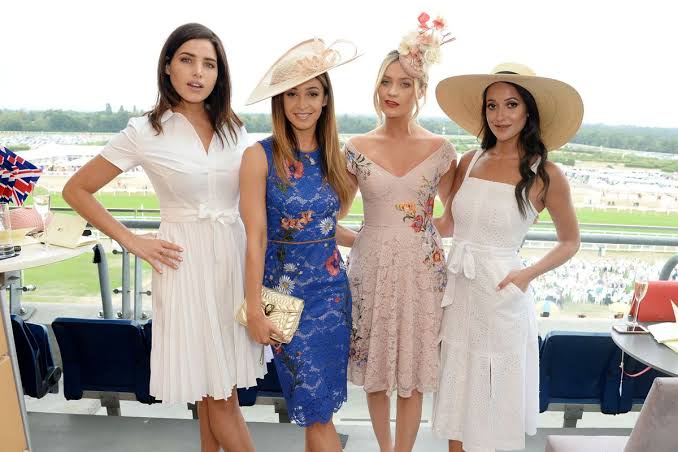
If you’re wondering what to wear to race day in New Zealand, the safest starting point is polished daytime dressing: a smart dress, tailored trousers or a skirt, comfortable shoes, a neat handbag and accessories that suit the occasion. For major race days, you can dress more traditionally with a fascinator or other headpiece; for general admission or a relaxed meeting, you may not need to be nearly as formal.
The key is to check where you’ll be sitting, the event’s dress code and the weather forecast before choosing your outfit. Racecourses can have different rules for general admission, hospitality areas and premium lounges. Auckland Racing, for example, has areas where smart casual is acceptable and others where jeans, shorts, sports shoes or jandals aren’t permitted.
This guide breaks the decision down into simple outfit formulas, including what to wear in warm or cool weather, whether trousers are appropriate, how to choose race-day shoes and when a fascinator actually makes sense.
 Learn more about how to choose comfortable shoes for all-day wear when planning your race-day outfit.
Quick answer: what should women wear to race day?
For a traditional race-day look, try:
Midi dress + block heels + small handbag + simple jewellery + fascinator or elegant headpiece
For something less formal:
Tailored trousers + blouse + blazer or polished knit + loafers or low heels + structured handbag
For a cooler New Zealand race day:
Midi dress + tailored coat + closed-toe shoes + compact handbag + understated headwear
The goal isn’t to buy an entirely new wardrobe. A well-fitting outfit that looks intentional and allows you to walk, stand and sit comfortably will usually serve you better than something elaborate that becomes difficult after an hour.
If you’re unsure about summer footwear, this guide on how to choose the right sandals for comfort and style can help.
Start with the dress code, not the dress
Before deciding on colour, shoes or accessories, find out what kind of race-day experience you’re attending.
A general-admission ticket can be considerably more relaxed than a hospitality area. Auckland Racing specifically notes that some general-admission areas have no specific dress code, while several hospitality and premium areas expect a smart standard of dress.
So ask yourself:
- General admission? A polished day outfit is usually enough.
- Hospitality or members’ area? Lean more formal and check the venue’s rules.
- Major race day or fashion-focused event? This is the opportunity to embrace a dress, headpiece and more considered accessories.
- After-race event? Check whether you’ll need to meet a second dress code.
This is one of the easiest mistakes for beginners to avoid. A beautiful outfit can still be the wrong outfit if it doesn’t meet the requirements of the area you’re entering.
For better support during long events, read about supportive shoes and finding the right fit.
The easiest race-day outfit: a midi dress
For many women, a midi dress is the simplest answer to what to wear to race day.
A midi dress falls somewhere between the knee and ankle, although the exact length varies with the design and the wearer. It gives you a dressed-up silhouette without requiring complicated outfit building.
Look for:
- A defined waist or a clean, straight silhouette
- A fabric that doesn’t crease excessively
- A neckline you can comfortably wear for several hours
- Enough room to sit and move
- A colour or print that works with your accessories
A floral dress can work beautifully for a daytime spring or summer meeting. A solid-colour dress is often easier for beginners because you can add interest through shoes, jewellery or a headpiece.
A simple formula
One-colour midi dress + contrasting shoes + small handbag + earrings
If you’re unsure about styling, resist the temptation to add everything at once. One noticeable detail is often enough.
For example, a bold dress can be paired with quieter accessories. A simple navy dress can take a more interesting fascinator or colourful shoes.
Can you wear trousers to race day?
Yes. Trousers can be an excellent race-day option, particularly if you don’t feel comfortable in a dress.
Try tailored wide-leg or straight-leg trousers with a blouse, structured top or jacket. The important distinction is between trousers that look deliberately polished and very casual everyday pants.
Outfit formula
Tailored trousers + elegant blouse + low heels or loafers + structured bag
For a more formal event:
Wide-leg trousers + fitted top + tailored blazer + pointed flats or heels + statement earrings
Trousers are also practical if the forecast looks unsettled. They give you more coverage and can make layering easier.
If you’re wearing a wider trouser leg, balance the proportions with a neater or more structured top. “Proportion” simply means how the shapes and volumes of your clothes relate to one another.
What shoes should you wear to race day?
Choose your shoes based on how much walking and standing you’ll actually do, not just how they look in the mirror.
Race-day venues can involve grass, paths, stairs, queues and plenty of time on your feet. A very high, narrow heel may look elegant but become uncomfortable quickly.
Better options include:
- Block heels
- Low or mid-height heels
- Dressy flats
- Polished loafers
- Elegant wedges where appropriate
If the venue has grass or soft ground, a narrow stiletto can be particularly impractical. A wider heel distributes your weight more effectively and is generally easier to manage.
Most importantly, don’t make race day the first outing for brand-new shoes. Wear them around the house beforehand so you know where they rub and whether you can comfortably walk in them.
For more general footwear guidance, StyleDress also covers how to choose comfortable shoes for all-day wear.
What about a fascinator?
A fascinator is optional rather than an automatic requirement, unless your particular event or precinct says otherwise.
Headwear is strongly associated with traditional race-day dressing, especially at major events. New Zealand’s racing fashion coverage describes racewear as an ensemble in which the dress, shoes, bag and hat or headpiece work together.
If you’re wearing one, choose it after you’ve selected your outfit rather than buying a fascinator first.
A useful beginner approach is:
Dress first → shoes second → headpiece third → jewellery last
A headpiece can match a colour in your outfit without being an exact match. For instance, a navy dress can work with a cream, tan or soft pink headpiece rather than requiring navy accessories from head to toe.
If your dress has a large print, a simpler headpiece may look more balanced. If your outfit is understated, the headpiece can provide the visual interest.
Race-day accessories: keep the outfit coordinated
Race-day dressing works best when the individual pieces look as though they belong together.
Think about these four elements:
Dress or outfit: the foundation
Shoes: should complement the outfit without fighting it
Bag: small enough to be practical but large enough for essentials
Headwear/jewellery: the finishing details
You don’t need matching shoes, bag and headpiece. Instead, repeat a colour, texture or metallic detail.
For example:
Emerald dress + nude heels + gold earrings + neutral handbag
or:
Cream trousers + coral blouse + tan shoes + gold jewellery
This creates coordination without making the outfit look overly matched.
Dressing for New Zealand weather
This is where race-day dressing in New Zealand deserves a little extra planning.
The forecast can make a bigger difference to your outfit than the fashion trend of the moment. MetService provides local forecasts, rain radar and severe-weather information across New Zealand, so check the forecast for the actual racecourse rather than relying on a general regional prediction.
You can also explore budget-friendly outfit ideas if you’re building a race-day look without overspending.
For a warm or sunny race day
Choose breathable fabrics and avoid anything that becomes uncomfortable in heat.
Good options include:
- Lightweight dresses
- Linen or cotton-blend pieces
- Dressy sandals where the venue allows them
- Lightweight tailoring
- A smaller handbag
Don’t forget that standing outdoors can make an outfit feel very different from trying it on indoors.
For a cool race day
Layer rather than choosing one extremely heavy garment.
Try:
Midi dress + tailored coat + closed-toe shoes
or:
Trousers + blouse + blazer + lightweight coat
A tailored coat is particularly useful because it can be removed when you’re indoors without making the outfit look incomplete.
If rain is possible
Think practically before reaching for delicate shoes or a floor-length hem.
Choose:
- A shorter or midi hem
- Shoes you can comfortably walk in
- A coat or jacket that works with the outfit
- Fabrics that aren’t easily ruined by a little damp weather
If severe weather is forecast, follow official weather warnings and any instructions from the event organisers rather than treating the outfit as the priority. MetService provides official forecasts and severe-weather warnings for New Zealand.
Five easy race-day outfit formulas
If you’re staring at your wardrobe and still don’t know what to wear, start here.
| Style | Outfit formula | Best for |
|---|---|---|
| Classic | Midi dress + block heels + small bag + headpiece | Major race days |
| Modern | Tailored trousers + blouse + pointed flats | Women who don’t enjoy dresses |
| Feminine | Printed dress + neutral heels + simple jewellery | Spring/summer events |
| Cool-weather | Midi dress + tailored coat + closed shoes | Winter or chilly race days |
| Relaxed polished | Wide-leg trousers + fitted top + loafers | Less formal race meetings |
These aren’t rules. They’re starting points. If your event invitation specifies a particular dress code, follow that first.
This guide on how to create more outfits from a small wardrobe is useful if you’re reworking pieces for race day.
What should you avoid wearing?
There isn’t one universal list of forbidden clothing for every New Zealand racecourse. Requirements vary by event and precinct.
Generally, though, reconsider anything that feels more suited to the beach, gym or nightclub than a daytime social event.
Depending on the venue, that might mean avoiding:
- Sportswear
- Very casual jandals
- Running shorts
- Ripped denim
- Extremely casual tops
- Shoes that are impractical for the venue
- Anything uncomfortable enough that you’ll spend the afternoon adjusting it
Some Auckland Racing hospitality areas specifically exclude items such as sports shorts, singlets, jandals and collarless shirts, while other areas have more relaxed rules.
The better question isn’t “What fashion rule am I breaking?” It’s “Does this look intentional for the occasion and meet the venue’s requirements?”
Common beginner mistakes
Buying the outfit without checking the venue
The same dress can be appropriate in one area and too casual—or unnecessarily formal—in another.
Choosing shoes for photographs rather than walking
Race day is not a two-hour dinner where you’ll sit most of the evening. Test your shoes before you go.
Treating the hat as an afterthought
A headpiece can change the balance of an outfit. If you’re wearing one, consider the hairstyle and neckline at the same time.
Ignoring the forecast
A gorgeous summer dress isn’t much fun if you’re cold all afternoon. Likewise, heavy layers can become uncomfortable on a warm day.
Trying too many statement pieces
Bold dress + enormous headpiece + dramatic shoes + oversized jewellery can quickly become visually busy.
If one element is making a statement, let the others support it.
A simple race-day checklist
The night before, check:
- Dress code for your specific area
- Local weather forecast
- Whether you’ll be walking on grass
- Shoes and whether you’ve worn them before
- Bag size and essentials
- Coat or extra layer if needed
- Headpiece, if you’re wearing one
- Jewellery and other accessories
- Whether the complete outfit is comfortable when sitting and standing
That last test is worth doing in front of a mirror. Sit down, walk across the room, raise your arms and put your handbag on your shoulder. If something feels awkward at home, it won’t magically become more comfortable at the racecourse.
The easiest way to get race-day style right
If you’re new to race-day fashion, don’t try to recreate the most elaborate outfit you see online.
Start with one polished foundation piece—usually a dress or tailored trousers—then build around it.
For traditional style: midi dress + block heel + headpiece.
For comfort: tailored trousers + elegant blouse + loafers.
For unpredictable weather: dress or trousers + tailored outer layer + practical shoes.
For a bold outfit: keep the accessories quieter.
For a simple outfit: let one accessory, colour or texture provide the interest.
That approach gives you something more useful than a rigid list of race-day “rules”: a way to make sensible decisions for your own event, wardrobe and comfort.
And if you’re still unsure, remember the simplest principle of all: dress slightly smarter than you would for an ordinary day out, then adjust the formality to match your ticket, venue and weather.
FAQ’s
1. What should a woman wear to race day in New Zealand?
A smart dress, tailored trousers or a skirt with polished shoes and coordinated accessories are reliable choices. For major race days, a fascinator or other headpiece can add a traditional racewear touch, while more relaxed meetings may call for less formal dressing.
2. Can I wear trousers to race day?
Yes. Tailored trousers with an elegant blouse, top or blazer can look just as appropriate as a dress. Choose polished fabrics and footwear rather than very casual trousers.
3. Do I need to wear a fascinator to the races?
No, not generally. Headwear is strongly associated with traditional race-day style, but whether it is expected depends on the event and precinct. Always check the specific dress code first.
4. What shoes are best for race day?
Block heels, low or mid-height heels, polished flats and loafers are practical choices. If you’ll be walking on grass or standing for long periods, a stable shoe is usually more comfortable than a very high, narrow heel.
5. What should I wear to an outdoor race day if the weather is uncertain?
Dress in layers and choose shoes that can handle the venue. A midi dress with a tailored coat works well in cooler weather, while trousers with a blouse and blazer offer another flexible option. Check the local MetService forecast before leaving.